Showing posts with label portraiture. Show all posts

July 14, 2017

Photojournalism Now: Friday Round Up - 14th July, 2017

This week on Photojournalism Now: Friday Round Up - the 7th edition of Cortona on the Move International Photography Festival kicks off plus Michael Wolf's retrospective Life in Cities and a new exhibition for Black Eye Gallery Sydney. Also entries are now open for the Australian Photographic Book of the Year Awards and the Moran Portrait Prize.

Festival:
Cortona on the Move – Cortona, Italy


(C) Pete Souza

The 7th edition of this international festival of photography held in Tuscany, Italy presents an impressive and eclectic line-up of work from around the globe. 

My picks are former Obama photographer Pete Souza’s Obama: An Intimate Portrait, which is a real treat, providing a rare personal insight into the former President during his eight years in the White House.

(C) Pete Souza

(C) Pete Souza

(C) Pete Souza

(C) Pete Souza

(C) Pete Souza

Also, renowned American photojournalist and activist Donna Ferrato showcases Woman: 40 Years, which explores themes of sex, love, and violence. 

(C) Donna Ferrato

(C) Donna Ferrato

(C) Donna Ferrato

Last year’s Eugene Smith Grant recipient Justyna Mielnikiewicz exhibits photographs from her award-winning submission The Meaning of a Nation - Russia and its Neighbours: Georgia and Ukraine. 

(C) Justyna Mielnikiewicz

(C) Justyna Mielnikiewicz

(C) Justyna Mielnikiewicz

Australian Adam Ferguson presents The Afghans, and Matt Black’s epic Geography of Poverty is also on show. 
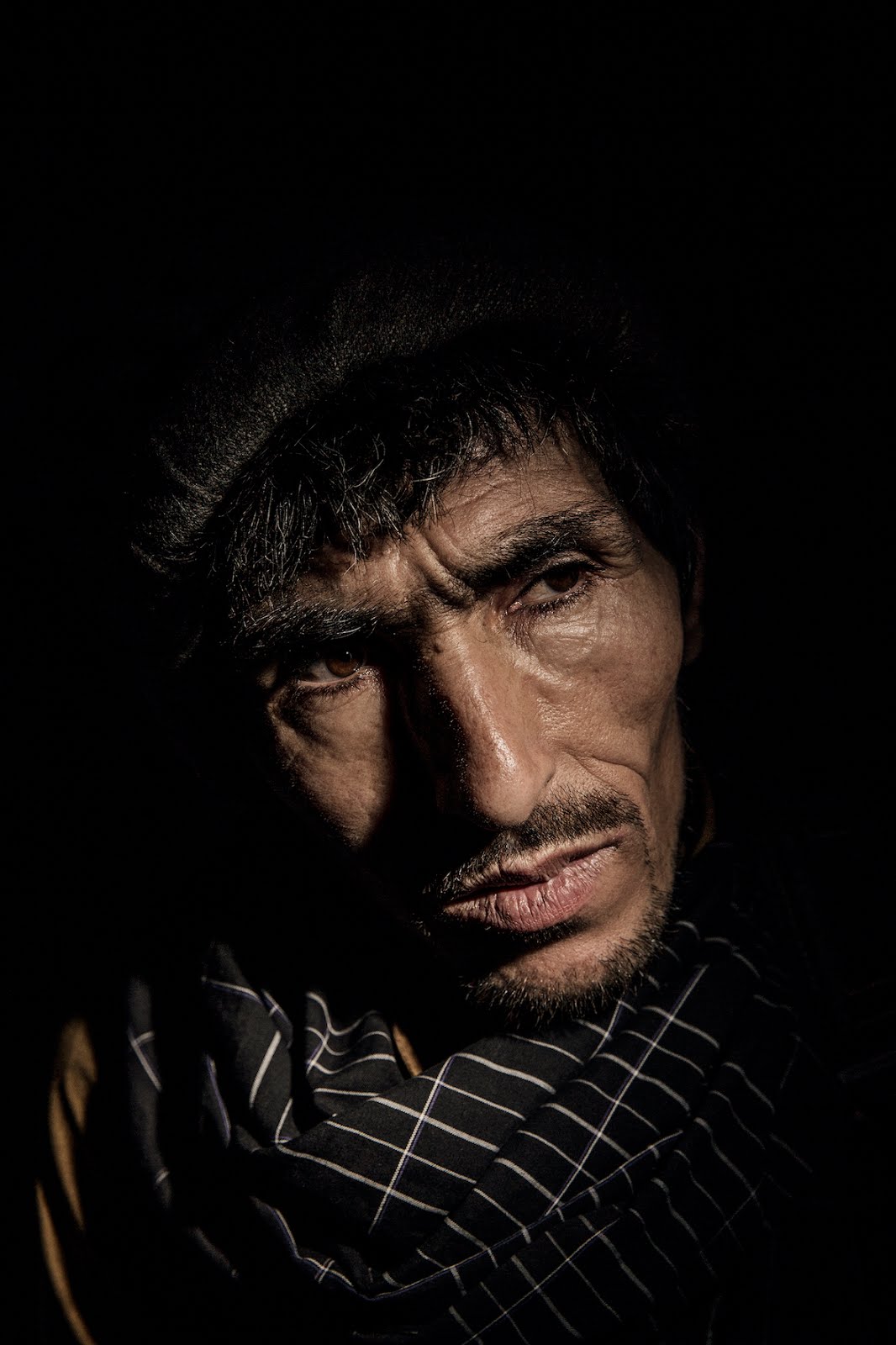
(C) Adam Ferguson

(C) Adam Ferguson

(C) Adam Ferguson

(C) Matt Black

(C) Matt Black

(C) Matt Black

French photographer Sandra Mehl presents her photo essay on the daily life of Ilona and Maddalena, two sisters living in the working class neighbourhood of Montpellier.

(C) Sandra Mehl 

(C) Sandra Mehl 

(C) Sandra Mehl 

(C) Sandra Mehl 

Michael Ewart’s I giardini selvatici della memoria - Tracce di una vetrina documents the changing face of Cortona. This collection, which he’s been working on since 1979, captures the transformation of what was a traditional agricultural market town to the luxury tourist destination it is today. 

(C) Michael Ewart

(C) Michael Ewart


(C) Michael Ewart

(C) Michael Ewart

In Danakil: Land of Salt and Fire Andrea Frazzetta discovers the Afar nomads of Ethiopia, who live in one of the most inhospitable locations on the planet. 

(C) Andrea Frazzetta

(C) Andrea Frazzetta

(C) Andrea Frazzetta

Exhibition sites are located around the historic centre of Cortona and in the old DeMedici hilltop fortress - Fortezza del Girifalco. 

Until 1 October
For more information visit the website.  

Exhibitions: Arles

Michael Wolf - Life in Cities

Architecture of Density (C) Michael Wolf

Architecture of Density (C) Michael Wolf

Architecture of Density (C) Michael Wolf

This is an exhibition I wish I could see. If you are in Arles, enjoy it for me! Michael Wolf's work on living in cities is sublime. Here is a very short selection from this amazing retrospective beginning with images from Hong Kong (above) from where I've just returned and featuring work from his Paris Rooftops series and Tokyo Compression. 

Paris Rooftops (C) Michael Wolf

Paris Rooftops (C) Michael Wolf

Paris Rooftops (C) Michael Wolf

Paris Rooftops (C) Michael Wolf

Tokyo Compression (C) Michael Wolf

Tokyo Compression (C) Michael Wolf

Tokyo Compression (C) Michael Wolf

Michael Wolf - Life in Cities
ÉGLISE DES FRÈRES PRÊCHEURS
Until 27 AUGUST

Sydney

Rob Love & SoonHoe - Luminosity & Momentum

(C) SoonHoe

(C) SoonHoe

(C) SoonHoe

Melbourne-based photographic artists Rob Love and SoonHoe team up to present Luminosity & Momentum at Sydney’s Black Eye Gallery. 

Love’s colour work draws on the relationship between water and light, his canvas Brighton beach in Melbourne. In contrast, SoonHoe’s black and white work was created on the shores of Malaysia’s fishing islands. Both artists focus on creating their images in-camera, with little post-production. It’s an interesting show worth checking out to see what the work looks like on the walls. 

(C) Rob Love

(C) Rob Love

(C) Rob Love

18 July to 6 August
Opening night 20 July 6-8pm
Black Eye Gallery
3/138 Darlinghurst Road
Darlinghurst (Sydney)
 

June 16, 2017

Photojournalism Now: Friday Round Up - 16th June, 2017

This week on Photojournalism Now: Friday Round Up - a feature interview with legendary photojournalist Maggie Steber, the Every Brilliant Eye exhibition at the National Gallery of Victoria and a new group show for Colour Factory celebrating the darkroom. Plus the Maggie Diaz Portrait Prize is open for entries, closing 14 July.

Interview: 
Maggie Steber - The Secret Life of Lily LaPalma
Alison Stieven-Taylor


“I can’t wait to get home to my dead lizards in the freezer,” Maggie Steber tells me as we sit down to talk about this legendary photojournalist’s most personal body of work, The Secret Garden of Lily LaPalma, a fantasy world in which Steber’s artistic side is flourishing. I tell her I’m going to have to start my article with that quote. “Of course. That’s absolutely fine,” she laughs. But we’ll get to the dead lizards later.

Having spent more than three decades documenting some of humankind’s less than honourable moments, and witnessing more death and destruction than anyone’s psyche can bear, Steber is finding a new way to engage with photography and the results are exquisite.

In some ways Lily LaPalma has seen Steber reconnect with the type of photography she did as a child. “When I first started taking pictures I did this sort of work,” she explains. “I grew up as an only child and was brought up by my mother who was a scientist and very eccentric. We had a very lively, cultural life”.


(C) All images Maggie Steber

In her formative years she was drawn to the dark side of fantasy. Steber experimented making what she calls “very strange pictures. I loved science fiction, as well as pulp fiction and B-Grade horror movies. I loved to be scared to death sometimes as a kid,” she laughs.

As a student of photography her professor told her she’d never make a living out of her photographic art. Unable to imagine a life that didn't involve taking pictures and telling stories, she moved into documentary photography, becoming the first female picture editor for Associated Press in New York.

After several years behind the picture desk, and with the threat of being promoted to management, a career step Steber wasn't interested in, she threw in her job, left her boyfriend behind and headed to Rhodesia (now Zimbabwe) which was in the grips of a long guerrilla war.

In Rhodesia Steber sought out the back-story to the war, something she found far more interesting than the fighting itself, forging a narrative style that would come to define her documentary work. “All of these people who had built a life, who had established farms, who were the colonial rulers, they were fleeing and that was the story I wanted to cover. I stayed for two years until the ceasefire and then returned to the United States”.

Back home she started working as a photojournalist, but says it was “hard” and she found herself covering a lot of news stories, which she didn't enjoy. “You know the five hour stake-out to get a single shot. That was not for me”.

Steber decided she wanted to tell stories and began experimenting with long form photo essays. “I started working in Cuba quite a bit, on my own dime and time. I’d do portraits or whatever I had to do, to earn enough to go. Over time I built a big body of work, but it was terrible, and I never showed it,” she laughs at the memory. “But I learned how to do a long term project and to tell a story”.

After Cuba, Steber decided she was ready to try her hand at a long-term study. She thought about going back to Africa, which she really missed, but it was too far away. At the time she was freelancing for a French picture magazine and they commissioned her to go to Haiti. “I fell in love with Haiti. After 30 years I still work in Haiti doing various projects. That early work really put me on the map and that’s when things changed in my career and I used the Haiti work to get my foot in the door with National Geographic magazine.” A relationship that continues today.

Steber’s career has been a mixed bag, as is the case with most freelancers. She’s shot fashion and commercial work, often as a way to fund her documentary photography, but at the heart of everything she shoots is the desire to tell a story.

Which brings us to The Secret Garden of Lily LaPalma, in which Steber’s skills as a master storyteller are clearly on display. But there is also a sense of playfulness here, as well as experimentation making the work fresh and engaging. “I’m reinventing myself as a photographer,” she says brightly. 

Steber tells me that she was one of triplets, but the other two babies were stillborn. As an only child, but patently aware that there were meant to be two others, she gave her sisters names. One of them was Lily, who was dangerous and adventurous, dark and mysterious and it is this alter ego who Steber draws on for inspiration. “In Lily’s secret garden there are no rules, no boundaries and anything can happen.” Steber’s eyes sparkle with possibility as she warms to the story.

“Suddenly I had this place I could play and it didn't have to be real, or sad or happy or dangerous, it could be anything. It was somewhere that I could act out all of these things through Lily. The thing I love about the Garden is that I don't have to care if anybody likes it. You know as photographers we are always worrying about whether people like our work.”

After years of experimenting, and sharing some work on Instagram, her favourite social media platform, Steber is now bringing The Secret Garden of Lily LaPalma out into the wider world. “Yes I am,” she says, her childhood Texan drawl suddenly noticeable. “But the Garden is not me, it is Lily. Sometimes it is fun to be bad and Lily is always killing people, so it’s pulp fiction, it’s fantasy”.

The pictures in the Garden are spontaneous, often found images that Steber works with later in Photoshop. She also uses Instagram filters and other apps. “I’ll be out and see something and just photograph it, which is a different way for me to work. Or I might be walking with friends and I’ll be like, oh can you lie down there for a moment, or could you run down that hall!” It’s clear she’s having a lot of fun and inviting viewers to use their own imagination in reading the work.

The Garden has not only provided a way for Steber to spread her artistic wings. Lily has also allowed her to exorcise some personal demons. “I’ve seen some terrible things in my life,” she says quietly acknowledging that many of the darker moments she has witnessed stay with her. We talk a little about art as therapy, and she agrees that in some ways playing in Lily’s Garden has been a release. “What I can say is I’m the happiest I’ve been in a long, long time. I’m gleeful in the Garden”.

And we're back to the lizards. “For the last few years I’ve been collecting dead lizards and freezing them.” We both burst into peals of laughter. “I live in Miami and I have a courtyard and these small lizards come in and I have cats and they are always catching them and killing them. I love them, they are like little dinosaurs, so I started saving them, wrapping them in foil and putting them in the freezer.” There’s more laughter and a caveat that she doesn't use the freezer for anything else. “It’s funny, when I was a little girl we had a freezer and my mother would bring home specimens from her lab, and she’d tell me not to eat anything out of the freezer. So I’m more like my mother than I’d care to admit!”.

Steber, who is the recipient of a Guggenheim Fellowship, is continuing her work on the Garden and the lizards will be its sentries. “They’ll keep the meanness, the criticism out. They are just beautiful. Some that didn't go in the freezer have deteriorated and they are now these amazing delicate skeletons”.

“The Secret Garden has given me a playground in which I can exercise my creative instincts and nature without any boundaries and any cares. At this point in my life I feel like I’ve earned this moment to play with something I have treated in a very serious nature and given up a lot in order to do.”

“My life has been so enriched by photography,” she says. “You know I’m just a little nobody from Texas. I’ve had a life I never thought I’d have and I can’t believe it sometimes. I’m grateful to photography and mostly grateful to the people in my pictures.”

See more images on Maggie Steber’s Instagram

In Brief:

Exhibitions: Melbourne

Every Brilliant Eye - NGV
(C) Patricia Piccinini - Psychogeography 1996 from the Psycho series
National Gallery of Victoria

This new exhibition at the Ian Potter Centre: NGV Australia Melbourne explores the cultural phenomena of the nineties - grunge, techno, cyborgs, identity politics and DIY - with more than 100 works by some of the foremost artists of the period.

Util 1 October
Ian Potter Centre
Federation Square
Cnr. Flinders & Swanston Streets
Melbourne

For the Love of the Dark - Colour Factory
(C) Tom Goldner

A group show celebrating the craft of the darkroom. Artists include Phill Virgo, Linsey Gosper, Shane Waghorne, David Tatnall, Ellie Young, Tom Goldner, Lynette Zeeng and Sophie Caligari.

Until 1 July
Colour Factory
409–429 Gore Street
Fitzroy