Showing posts with label environment. Show all posts

June 17, 2016

Friday Round Up - 17th June, 2016

This week on Friday Round Up three photo essays that talk about issues that often don't find their way into mainstream media.

And if they do, these stories aren't given the depth of coverage required for a broader audience to begin to understand what these individual stories are about and how they influence and impact humanity as a whole: Sean Gallagher's The Silent Fields; Sara Terry's Aftermath; and David Verberckt's project on Myanmar's stateless people, the Rohingya.

Photo Essays:

Sean Gallagher - The Silent Fields - Pesticide Poisoning in Punjab


(C) Sean Gallagher

Punjab is the food bowl of India, the country’s most significant agricultural area, but the high use of pesticides, fertiliser and insecticides over the past four decades has turned this region into a toxic bowl. 

Here an increasing number of babies are being born with mental and health disabilities and residents are dying from various cancers which can be attributed to the contamination of soil, water and of course food. 


(C) Sean Gallagher


(C) Sean Gallagher

(C) Sean Gallagher


Sukhbeer Kaur (19) holds a portrait of her father, Pippal Singh, who died in 2010 of cancer, aged 40. It is believed that excessive pesticide use in the region over the past 30-40 years has led to the accumulation of dangerous levels of toxins such as uranium, lead and mercury which are contributing to increased health problems including cancers, birth defects and mental disabilities in children. It's a hidden epidemic which is gripping the Punjab region in northeast India which for decades has been the country's 'bread basket'. (C) Sean Gallagher


Harmangod Singh (6) sits next to a portrait of his mother, Charnajeet Kaur, who died in 2010 of brain cancer, aged only 31.  
(C) Sean Gallagher

Sean Gallagher is a multi-award winning photographer based in Asia for more than a decade. 

His work on environmental issues and their impact on communities is influenced by his background, he has a degree in zoology, and his desire to create work that can help to affect change. 

The recipient of numerous Pulitzer Center on Crisis Reporting grants, Gallagher is also represented by National Geographic Creative and is a Fellow of the Royal Geographical Society. 

I've featured his work here before for the simple reasons that is is incredibly important, and truly outstanding. 

You can read Sean’s full report on Punjab here


Sara Terry - Aftermath: Bosnia’s Long Road to Peace


(C) All images Sara Terry

The idea that “war is only half the story” is what drives the Aftermath Project, a non-profit organisation founded by photographer Sara Terry whose own work on Bosnia and Hercegovina documents the impact that war (1992-1995) had on individuals and also celebrates their efforts to rebuild their lives.

Terry objective is to show the other side of war, the stories the mainstream media rarely focuses on.

To find out more visit the Aftermath Project here.

David Verberckt - The Stateless Rohingya 


There are around one million Rohingya, a Muslim minority, living in Myanmar in the northwest of that country.

Deprived of citizenship, the Rohingya live a life of persecution and deprivation, denied the opportunity to work legally and to receive basic services such as education and healthcare.

As a consequence they live in an impoverished limbo, their children born into a stateless world where there is little hope for a brighter future. 


(C) All images David Verberckt

Verberckt is a freelance photojournalist based in Budapest.

For twenty years he worked with MSF and also the European Union in Afghanistan, Africa and Bosnia before fully committing himself in 2013 to a life of reportage photography.

This body of work is part of a series on statelessness shot in Myanmar, Bangladesh and India with the Bihari and Rohingya peoples.

To see more of David's work click here

October 23, 2015

Friday Round Up - 23 October, 2015

This week on Friday Round Up another eclectic selection of images - Tom Hussey's Reflections, Emilio Fraile's eWaste in Ghana, Stephen Mallon documents NYC's solution for used subway cars, the extraordinary natural vistas of China's Gansu Province and cinematographer and naturalist Feodor Pitcairn's Primordial Landscapes reviewed.

Photo Essay:
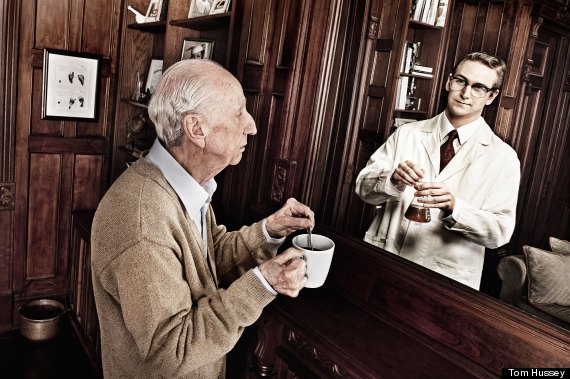
Tom Hussey - Reflections


American photographer Tom Hussey has created this wonderful series of images where the subject looks back on their life through the reflection of their younger self in the mirror. Hussey came up with the idea for the series after talking with an 80-year-old World War II veteran who told Hussey that he couldn’t believe he was so old, as he still felt like a young man. Hussey and his team scouted for believable doubles to pose as the younger self. While ageing is something that happens as a natural part of time’s passage, these redolent, meditative images give us all something to think about.


(C) All images Tom Hussey

Photo Essay:
Emilio Fraile - The Fate of Electronic Waste
In March this year Spanish photographer Emilio Fraile travelled to Accra, Ghana's largest city to document the lives of those eking out a living on the electronic dump at Agbogbloshie. This area used to be a wetlands and is now considered one of the most polluted places on earth. Fraile says thousands live "in this hell" and put their health at risk through exposure to toxic chemicals and metals as they strip down this eWaste, much of which arrives on large container ships.


(C) All images Emilio Fraile


Photo Essay:
Stephen Mallon - Next Stop Atlantic

(C) Stephen Mallon

(C) Stephen Mallon

From this (above) to the images below in 5 and 10 years respectively


Photo courtesy viralforest.com

Photo courtesy viralforest.com

New York photographer Stephen Mallon spent three years working on this series which documents the disposal of used subway cars in New York City. These subway cars are stripped and then dumped into the Atlantic ocean, a practice that has seen more than 2500 cars submerged in the past decade. These subway cars are used to build underwater reefs along the US’ eastern seaboard, which creates new habitats for marine life and also is worth an estimated $200 million annually to the US economy in coral. 


(C) Stephen Mallon


(C) Stephen Mallon


(C) Stephen Mallon

(C) Stephen Mallon

Photos:
China's Gansu Province
These photographs are of the Dramatic Landscape of China’s Gansu Province in northwestern China as reported by Alan Taylor for The Atlantic. You can see the full story and more images here.
Zhangye Danxia Landform Geological Park
(C) Wang Song / Xinhua Press / Corbis

Chen Yonggang / Xinhua / Corbis


Flowering rapeseed plants blossom in a field in Minle, Gansu
SIPA Asia via ZUMA Wire / Wangjiang / Corbis

Salt harvest
Wang Jiang / Imaginechina / Corbis


Terrace Crops
Sheng Li / Reuters


Book Review:
Primordial Landscapes: Iceland Revealed
Feodor Pitcairn with Ari Trausti Guðmundsson


(C) Feodor Pitcairn Primordial Landscapes: Iceland Revealed powerHouse books

In recent times cinematographer and naturalist Feodor Pitcairn, who is 80 years old, has given up shooting underwater films, and turned his attention to terrestrial landscapes. He’s embarked on several expeditions to Iceland to capture the natural beauty of one of the most romanticised places on the planet. These photographs come together in a new book from powerHouse Primordial Landscapes: Iceland Revealed. (You can read the full review and see more of his exquisite images by clicking on the Book Reviews tab at the top of the blog.)

January 16, 2015

Friday Round Up - 16 January, 2015

Welcome to the first edition of Friday Round Up for 2015. This week in celebration of the launch of #everydayclimatechange, we look back at some of the stories published on Photojournalism Now in 2014 with environmental themes.

(C) Edward Burtynsky

(C) Paul Blackmore

(C) Sean Gallagher

(C) Katie Orlinsky

Launch:
#everydayclimatechange on Instagram


#everydayclimatechange launched on 1st January, 2015 and the concept has quickly attracted a diverse group of photographers from around the world who are committed to sharing "visual evidence" that climate change is real.  

Founder of #everydayclimatechange, Tokyo-based photographer James Whitlow Delano, says the idea for the hashtag was borne from a conversation he held with Peter DiCampo, co-founder of Everydayafrica. The "everyday" concept has proved popular and there are now various #everyday where photographers upload uniquely local imagery. 

The creation of an environmental "everyday" seems a logical step in building on this proven platform as does Delano's involvement, which stems from his long term commitment to document natural disasters. 

It's a fantastic initiative and it's exciting to see how many photographers have come on board so quickly. Seeing is believing, and these photographs provide proof that our climate is shifting. This is where social media platforms come into their own in reaching potentially millions of viewers. The more people who "follow" #everydayclimatechange the greater the likelihood that perceptions will change. 

2014 In Review - The Environment

James Whitlow Delano - Black Tsunami


Last year Photojournalism Now reviewed Delano's book, Black Tsunami. Published by FotoEvidence Black Tsunami features 91 black and white photographs that capture the apocalyptic scenes that were left in the tsunami’s wake. Divided into four parts Black Tsunami charts Delano’s coverage of the disaster over what he describes as an “intense 18 months”. After the initial trip to Iwate Prefecture Delano returned to Tokyo. Soon the damage to the Fukushima nuclear plant and its consequences for the country as a whole began to overshadow the devastation of the tsunami. It was at that point the story shifted for Delano from recovery to nuclear disaster....(you can read the full interview on the book review tab at the top of this blog). To see more of James' work you can visit his website here.

Simon Harsent – Melt: Portrait of an Iceberg


Photographer Simon Harsent says the underlying theme that resonates throughout his personal work “are the paths we choose in life”. It is this proposition that has influenced his series on icebergs, Melt: Portrait of an Iceberg. While the literal translation can be seen in the pathways these frozen behemoths follow in their physical journey, allegorically it can also be applied to the environmental choices that the human race has taken.

In Melt Harsent captures these glacial giants as they journey down “iceberg alley” from the Ilulissat Icefjord to Greenland’s Disco Bay and onto the east coast of Newfoundland. These icebergs can take years to make a journey that transforms these giants as they are reclaimed by the ocean. (Click here for full story and more images)

This series, which is also a book, will be on show from 27 January to 15 February in Sydney at Blackeye Gallery.

Ed Burtynsky - Water


Undoubtedly one of the most respected landscape photographers working today, Edward Burtynsky’s body of work titled ‘Water’ builds on his already impressive oeuvre and is nothing short of breathtaking. Burtynsky’s approach to the landscape is driven by his desire to capture humankind’s relationship to nature and how this is expressed in the industrialised landscape. Published by Steidl.

Paul Blackmore - At Water’s Edge


Australian photographer Paul Blackmore's book, At Water's Edge, tells the story of our relationship with water. From the vastness of the Pacific Ocean to the toxic black waters of the Buriganga River in Bangladesh; from the voodoo pilgrimage in Haiti, to the holidaymakers bobbing in the Black Sea; from the water pipes that carry fresh water to Mumbai’s elite to the squalid lives of refugees in Ethiopia, “At Water’s Edge” reminds us that no matter our race, gender or the size of our bank account, we all rely on fresh water for our very survival. It is a precious commodity and yet the devastation of our fresh waterways and oceans continues apace. While Blackmore’s photographs are in part celebratory, they also serve as a warning. Published by T&G Publishing, Sydney

Chris Jordan - Intolerable Beauty


American photographer Chris Jordan's series "Intolerable Beauty: Portraits of American Mass Consumption" is fascinating and terrifying at the same time. The rampant consumption of the West, which countries like China and India want to emulate, has resulted in masses of waste that threaten to choke the planet. Jordan's photographs are interesting compositions, almost abstract at times, yet the message is clear. To see more of Chris' work visit his site here

Sean Gallagher - The Toxic Price of Leather


Photographer Sean Gallagher's photo essay, and short film “The Toxic Price of Leather” is a powerful study of the shocking impact of India’s leather industry on both human beings and the environment. In my opinion Gallagher is one of the most insightful documentary photographers working today and his images continually bring to light issues that should concern all who are interested in caring for others and for the planet. In this series Gallagher documents the lives of those working and living in Kanpur, India. Here there are around 300 tanneries, with Kanpur now the largest exporter of leather in India. Ninety percent of its products are produced for Europe and the United States.

The environmental impact of the tanneries on the local area, and the Ganges River, is significant as is the toll on the health of both tannery workers and local residents. Once again the West is procuring goods at ridiculously low prices ignoring the fact that their practices are in fact exacting the highest price of all.

To see more of this work and other environmental projects visit Sean Gallagher’s website here and follow #everydayclimatechange to see Sean's posts.

Daniel Beltrá - SPILL


SPILL documents the disastrous Deepwater Horizon Gulf Oil spill in the Gulf of Mexico in 2010 when more than 210 million gallons of crude oil were released into the ocean devastating an area of more than 68,000 square miles. This spill was one of the most catastrophic environmental disasters of all time.

Beltrá’s aerial photographs may appear as abstract art, and are undoubtedly visually stunning, but the truth behind these images which capture the monumental scale of this disaster should not be forgotten. Published by Gost Books.

Murray Fredericks - Topophilia


Shot over a three-year period from 2010-2013, in Topophilia Australian landscape photographer Murray Fredericks builds on his earlier work, the multi-award winning series Salt shot in Australia’s Lake Eyre. In both series Fredericks uses featureless, flat and seemingly infinite landscapes to echo the vastness of space where time is frozen and voids open like the maw of a yawning giant. In Fredericks’ eye the landscape is the vehicle, which conveys a greater story that transcends the physical form.


Fredericks spends weeks at a time alone in these vast expanses and it is in isolation that he creates his large-scale works that are nothing short of breathtaking. To see more of his work visit his website here.

Alex Masi - Bhopal Second Disaster


UK photographer Alex Masi's book Bhopal Second Disaster documents the plight of more than 30,000 people who live in colonies that are still affected by the toxic waste from the catastrophic industrial accident at Union Carbide’s Bhopal chemical plant in 1984. This waste that has never been cleaned up and continues to pollute underground water reserves. Birth defects, neurological illnesses and other severe health issues burden a people that have largely been ignored by the outside world. Published by Fotoevidence.

Katie Orlinksy - Bear Town


American photojournalist Katie Orlinsky's photo essay for Al Jazeera America shows the impact of climate change on the Arctic's wildlife. In the Alaskan town of Kaktovik, polar bears are seen frequently scavenging for food as the ice recedes, and armed residents are joining the polar bear patrol to keep locals safe. The proliferation of polar bears is also becoming a tourist attraction. To see more of Katie’s work visit her website here.