Showing posts with label arles. Show all posts

July 01, 2016

Friday Round Up - 1st July, 2016

This week it's all about Les Rencontres D'Arles the largest photography festival in the world.

The 47th edition and the second under director Sam Stourdzé opens on 4th July with the central theme of photographers as storytellers.

That might be stating the obvious, but the art of storytelling is complex and in this image-saturated world it may be the key factor in defining the critical difference between professional photographers' work and the photography of the masses.

The 2016 programme presents exhibitions organised under key headings: Street Photography Revisited, Western Stories, Monsters & Co., Africa Pop, Platforms of the Visible New Approaches to Documentary Photography; After War; I Am Writing To You From a Far Off Country; Rereading Photography in a Different Light: Singular (Quirky Collections); Outside the Frame; and Emergences. There is also an associated programme, book awards, workshops and more.

As eclectic as the programme so is my selection. Feast your eyes on works by Alexandre Guirkinger, Bernard Plossu, Eamonn Doyle, Ethan Levitas, Garry Winogrand, Don McCullin, Yan Morvan, Piero Martinello, PJ Harvey and Seamus-Murphy, Sid Grossman and more. Enjoy!

AFTER WAR:
Alexandre Guirkinger 


MAGINOT LINE - "Burrows are fascinating because usually only the outline or threshold is known; the rest is left to the imagination. On a symbolic level, the same is true for the Maginot Line: everybody has heard of it but few can describe it. Its name resonates like a receptacle for fantasies. Their shapes have a symbolic dimension. Through my images, I wanted to share my fascination with this extraordinary relic of an already old modernity. The shape, location or outline of the bunkers I chose to photograph leads the image to become something more than the material record of a border: a kind of science fiction movie set, a trace of land art, modernist architecture, a contemporary geoglyph or something else that captures the imagination. The gap between the abundance of the line’s relics and the lack of contemporary representations offers an exciting playground to question our relationship to the landscape, borders and limits." Alexandre Guirkinger 

Yan Morvan


Battlefields - "Yan Morvan’s impression that media coverage of conflicts no longer boils down to anything more than infotainment and the mass consumption of images prompted him to orientate his work in a different direction and portray the image and reality of war more thoughtfully. In the spring of 2004, he travelled around the world with his tripod and Deardorff 20x25cm in search of places that have made history for 3500 years. Do they still recount the past? Mr. Morvan’s working conditions may not be the same as a photojournalist’s, but he actually continues photographing war through its absence. This exhibition, which features 80 pictures, provides us with a thought-provoking glimpse of history."  Marco Zappone

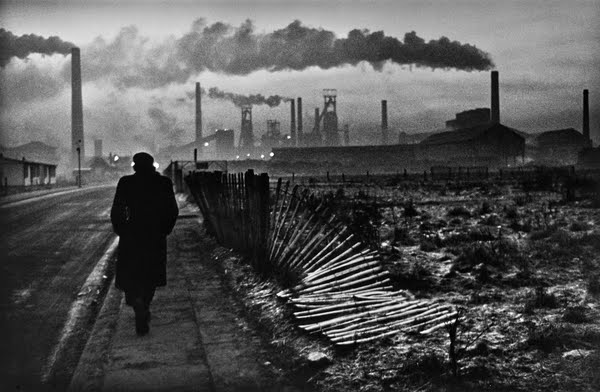
Don McCullin


"Don McCullin is known primarily as one of the most highly regarded conflict photographers of the late twentieth century, having produced some of the most iconic and defining images of wars in Vietnam, Cyprus, Beirut and Biafra. The exhibition of his work at the Rencontres d’Arles 2016 brings together, for the first time, the wealth and depth of his photographic practice beyond the limits of conflict, exploring his long standing practice as a documentary and landscape photographer. Even outside the frame of war, McCullin’s work reflects some of the most pressing social issues of our time, always portrayed using a photographic language of great beauty and subtlety. Perhaps his greatest talent, however, has been his ability to capture a diversity of subjects from a consistent standpoint. From his local surroundings in London, to foreign conflicts and tragedies, or returning to the peaceful landscape of the Somerset levels, there is a universal way in which McCullin reveals the world around us." Simon Baker and Shoair Mavlian

WESTERN COLORS:
Bernard Plossu


"Bernard Plossu’s last official visit to Arles was for a 1987 group show of work by photographers using the Fresson process. At the age of 71, Western Colors is his first solo exhibition. Rewind: in 1966, Plossu arrived in San Francisco. The 21-year-old longhaired beatnik had a deep desire to experience and live in the American West that had captured his imagination. He was more excited about the Indians than the cowboys. In his eyes, they symbolise revolt, freedom, space and nature—a lost paradise to which he kept returning on hikes or car trips in Nevada, New Mexico, Arizona, Utah and California until 1985, when he definitively returned to France. Armed with a Nikkormat with a single 50-mm lens, Plossu shot his own colour Western. The shots are still, soft and empathically and enthusiastically framed. Plossu is in his element. He not only captures his dreams but breathes life into them. He shows nothing. He is not a reporter. He constructs no series nor pursues any theme. He breathes, photographs, walks, photographs, drives, photographs. Westerns forever!" Stéphane Brasca

Street Photography:
Eamonn Doyle


"End. seeks out the driving forces of both photographer and subject in an exhibition that brings together three bodies of work—i, ON and End.—exploring the local streets of Doyle’s native Dublin. Though apparently the concluding work of a trilogy, End. actively opens up the heart of the whole. i presents unknowable street figures enveloped entirely in the interior landscape of their location. ON’s black & white giants convulse across their own image, bracing the hard Dublin light. End. as a sequence of events revealing a city whose concrete is as plastic as the movement of its inhabitants. Created as both installation and publication, End. is a collaborative work by Eamonn Doyle, Niall Sweeney and David Donohoe. Built around the photographs of Doyle, it also features drawing and sound by Sweeney and Donohoe." Niall Sweeney

Ethan Levitas and Garry Winogrand
(C) Ethan Levitas

(C) Garry Winogrand

Radical Relation - "Pairing the pioneering and complementary oeuvres of Ethan Levitas and Garry Winogrand, this exhibition re-examines the street photography through its own language and terms in order to situate it properly within the open field of contemporary art practice. Hailed by John Szarkowski as the central photographer of his generation, Winogrand’s contribution to street photography is widely acknowledged, if only partly understood. An inheritor of Winogrand’s unfinished legacy, Levitas has, over the past decade, developed and extended the practice of street photography by defining it as a relation of parts—the sum of which discloses a dissonance between visibility and appearance. What does it mean to look? Can meaning be created through the act of looking? Among Levitas’s bodies of work, we can more clearly comprehend the significance of Winogrand’s endeavor, and see a fulfillment of its promise." Joshua Chuang

Sid Grossman


From Document to Revelation - "Sid Grossman is an important but long-overlooked figure in modern American photography. Before his death in 1955, at the age of 42, he created a powerful and influential body of work. Grossman began as a social-documentary photographer and helped found the New York Photo League in 1936. In the spirit of the League’s left-leaning politics, he photographed in the working-class neighborhoods of Chelsea and Harlem until the mid-1940s, when Grossman’s vision became more personal and subjective. Radical in its day, this work exemplified the expressionistic energy of the ‘New York School’ of the 1950s. In 1949, the FBI blacklisted Grossman as a communist ‘ subversive’. This exhibition is the most comprehensive look at Grossman’s artistic achievement and influence in at least 35 years, and his first exhibit in Europe. It includes rare vintage prints from the Grossman estate and from noted public and private collections, as well as works by his leading students. " Keith F. Davis

Platforms of the Visible 
New Approaches to Documentary Photography
Piero Martinello


Radicalia - "Radical’ is something ‘acting in depth; concerning an issue beginning with its essential principles’, according to Salvatore Battaglia’s definition in the Grande dizionario della lingua italiana. With this as his starting point, photographer Piero Martinello travelled around Italy in search of women and men who—each in their own way and for different reasons—have embraced radical choices and lifestyles. Fools, ravers, criminals, devouts and cloistered nuns: Martinello’s subjects come to life in a series of portraits in which the photographic medium appears at times in its pure form, at others grafted in items of vernacular iconography (passport pictures, holy pictures, mug shots). Everything comes together in a concept album where the face becomes a prism through which to investigate the human need to undertake extreme and unconventional life paths."

Other Exhibitions:

PJ Harvey and Seamus Murphy


Swinging Bamako


Phenomena Realities Extraterrestres


Lady Liberty


Les Rencontres d'Arles runs 4 July to 25 September.

July 10, 2015

Friday Round Up - 10 July, 2015

This week on Friday Round Up - Generation '74 at Arles, Eastern Europe under the Lens at ACP, the launch of Maggie Diaz Photography Prize for Women and #Dysturb holds workshop in Sydney.

Photos of the Week:
Child Labour 1908 and 2015


Lewis Hine 1908


Reuters 2015

Exhibition: Sydney
Ex & Post - Eastern Europe Under the Lens
Group Show

Andrej Balco, Pezinok from the series Suburbs 2005-2006

Curated by Sári Stenczer and Krisztina Erdei this group exhibition features works from Bulgaria, Romania, Ukraine, Georgia, Germany and Slovakia. The exhibition explores the aftermath of the collapse of socialist systems in Eastern Europe, the impact on individuals and communities and how those nations are seeking to define cultural identity. 


Rafal Milach, Baranovichi Sasha, the best welder of the Republic of Belarus

Until 16 August
Australian Centre for Photography
257 Oxford Street
Paddington

Book:
Generation ‘74


I really love everything about this book – the concept, the photographs, the text, the production. I saw Generation ’74 when I was at the Auckland Festival of Photography in May and soon it will be on my shelf, after making the journey to Australia all the way from Lithuania.

Generation ’74 features 11 photographers born in 1974. But it’s so much more than a collection of images from a bunch of 40 year olds. Each chapter features a single photographer and begins with a photograph from their childhood followed by 10-12 pages of their work. At the end of the book there is an insightful Q&A also. 


Here’s an excerpt from the book’s introduction by one of the photographers and the book’s publisher, Mindaugas Kavaliauskas who is also the director of KAUNAS PHOTO festival.

What do these 11 photographers have in common apart from the year they were born in? Well, quite a lot actually. Today, every one of them is well known in their respective countries and beyond. Some are globally renowned and celebrated figures of photography, but before they became what they are now, they too experienced some historical milestones. They were turning 15 in the year when the Berlin wall came down; the guys from the ‘Eastern Bloc’ were between 16 and 18 years old when their countries regained their independences; and they experienced the expansion of the European Union in 2004 when they were in their thirties. “Generation ‘74” accommodated the Internet and digital photography at a mature age, without having discarded the fundamental ideas about life and photography. They all have created long-term projects based on the notion that the world has been transitioning from analogically unique to uniformly global. Their attitude towards taking pictures is imprinted by a sense of civic, social, and individual duty to make honest statements about their countries of origin, residence and those they visit on project trips. Their photographic works do not pretend to be fashionable, flashy, and are by no means superficial or glossy. Instead, they are humane, thoughtful, bitter, ironic, humorous, critical, and they are resonating with what people feel deep down, rather than say out loud.

Photographers in Generation ‘74: Simon Roberts (UK), Nick Hannes (Belgium), Kirill Golovchenko (Ukraine/Germany), Przemyslaw Pokrycki (Poland), Tomáš Pospěch (Czech Republic), Mindaugas Kavaliauskas (Lithuania), Vitus Saloshanka (Belarus/Germany), Gintaras Česonis (Lithuania), Borut Peterlin (Slovenia), Pekka Niittyvirta (Finland), Davide Monteleone (Italy).

To find out more or to order Generation ’74 click here

If you're in Arles at the moment, you can get your copy at Cosmos Books.

New Prize:
Maggie Diaz Photography Prize for Women

$5000 Photography Prize
$1000 People’s Choice Award


Migrants working on railway 1960s

This newly instituted prize celebrates Maggie Diaz, an American photographer who arrived in Melbourne in 1961 with a one-way ticket, five dollars in her pocket and more chutzpah than the photographic community had seen. Undeterred by the male dominated industry, she successfully established herself as a commercial photographer and went on to shoot for some of the major advertising agencies.

But her passion was photographing Melbourne’s artists, actors and those she came across on the street. Often she’d roam the city after dark with her Rollie capturing a visage of Melbourne that few saw. Her signature is found in the use of available light and her ability to find that evocative moment in everyday happenings. 


Beach Boys


Radio 3AW mobile studio 1960s
Maggie is now 90, and it is only in the past decade that her vast oeuvre has come to light through the work of her long-time friend and her curator, Gwen de Lacy. I was fortunate to interview Maggie a few years back and it was a privilege to hear her stories. She’s a sassy dame, a straight shooter and we had a lot of laughs.

The Maggie Diaz Photography Prize for Women, which is sponsored by Guilty Films, is designed to encourage female photographers to keep pursuing their passion. The winner will be announced on 3 September at Brightspace Gallery in St. Kilda when the Maggie Diaz Projects exhibition opens. Judges for the inaugural prize are Naomi Cass, Director Centre for Contemporary Photography, noted photographer Ponch Hawkes and Ballarat International Foto Biennale Director Jeff Moorfoot.

To find out more about the prize click here 

Workshop:
#Dysturb at ACP


Benjamin Petit © 2014#Dysturb continues its association with the Australian Centre for Photography (ACP) after taking over its Instagram feed recently. On Saturday 18th July photographers Madelena Rehorek and Tamara Voninsky will run a one day workshop at ACP focusing on reportage skills and social engagement. Visit ACP for more information on its Photocise program and details on how to register for #Dysturb's workshop.